

Personal loans are marketed as effortless financial tools — instant cash, fast approval, and fixed monthly payments. But hidden beneath the comforting language of convenience lies a lending system optimized to benefit banks first and borrowers second. The truth is, there are many personal loan hacks that can dramatically lower interest, reduce payments, avoid fees, and even empower you to renegotiate terms. These are strategies that lenders hope you’ll never uncover, because once you apply them, you become a borrower who costs them money rather than one who makes them money.
This article will reveal actionable, real-world hacks — backed by data and real borrower experiences — that can save you thousands of dollars over the lifetime of your loan.
Hack #1: Timing Your Application After Reducing Credit Card Debt
One of the biggest factors influencing your loan interest rate isn’t just your credit score — it’s your credit utilization ratio. This ratio measures how much of your credit you’re using versus how much is available. According to Experian, credit utilization accounts for nearly 30% of your total credit score. The lower it is, the more responsible you appear to lenders.
What banks don’t tell you is this:
If you pay down a significant portion of your credit card debt and wait 60–90 days, your credit score can rise enough to qualify you for a much lower interest rate.
A real example illustrates this clearly. Amanda, a 34-year-old in Ohio, had a score of 660 and a maxed-out credit card. She used tax refund money to pay down her card debt, reducing her utilization from 70% to 23%. Within two months, her score jumped to 712. When she applied for her personal loan, the APR she was offered dropped from 18.4% to 10.9%. On a $15,000 loan, that difference saved her over $3,200 in interest.
The key lesson: before applying for a loan, pay down revolving debts, wait for the credit bureaus to update, and let your score rise in silence.
Hack #2: The Rate Reassessment Trick (Most Borrowers Never Ask)
Many borrowers mistakenly assume that once they sign the contract, their interest rate is locked forever. But the truth is, if your financial situation improves, you can request a rate reassessment — and banks often grant it.
This works best if:
- You’ve made consistent on-time payments for 6–12 months
- Your credit score has improved
- Your income has increased
- Your debt-to-income ratio has improved
- You have a positive history with the lender
Michael, a borrower from California, originally took a personal loan at 19% APR. After eight months of flawless payments and a job promotion, he asked his lender to reevaluate his rate. They dropped it to 12%. That difference over 3 remaining years saved him $2,870 in interest.
Banks won’t suggest this to you. But if you ask — they will often cooperate, because retaining a financially stable borrower is statistically less risky than letting them refinance elsewhere.
Hack #3: Shorter Loan Term = Much Less Total Interest
Borrowers tend to focus on the monthly payment rather than the total cost of the loan. Banks know this psychology and use it to hook borrowers with seemingly affordable monthly payments stretched over long terms.
For example:
Borrowing $10,000:
- Over 5 years at 15% interest results in ~$4,273 in interest
- Over 3 years at 13% interest results in ~$2,130 in interest
That’s nearly half the interest for the same loan amount.
Even if your monthly payments are higher with a shorter-term loan, the total cost is dramatically lower. Smart borrowers choose shorter terms whenever feasible to avoid overpaying for borrowed money.
Hack #4: Don’t Accept the First Offer — Leverage Multiple Lenders
Banks and lenders expect borrowers to accept the first offer they receive. But smart borrowers treat loan shopping like price negotiation.
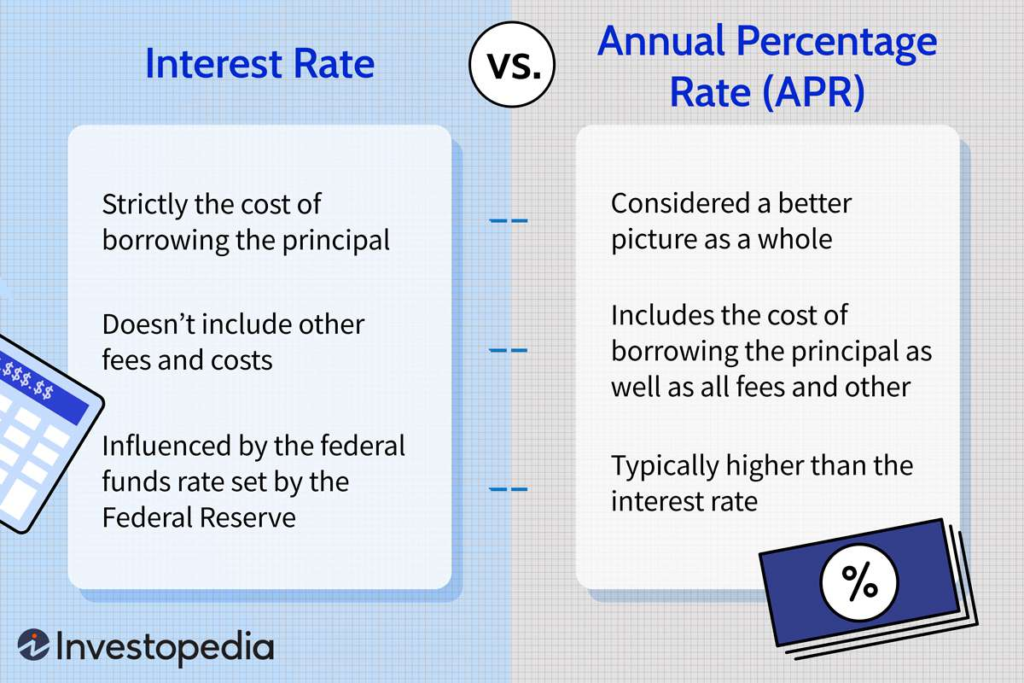
FICO rules allow multiple loan rate inquiries within a short period (typically 14 days) to count as a single credit inquiry — meaning your credit score won’t get repeatedly hit.
Here’s how smart borrowers do it:
- Request quotes from several lenders
- Compare APRs, fees, and loan terms
- Use one offer to negotiate a better one
A simple message like:
“I received a competing offer at 10.8% APR. Can you match or beat that?”
…can suddenly unlock a “special reduction” that wasn’t available earlier. Banks love secrecy — but they hate competition.
Hack #5: Decline Add-Ons — Most Are Unnecessary
Many lenders aggressively push extra services bundled into the loan:
- Payment protection insurance
- Loan insurance
- Account handling fees
- Documentation fees
- Early debit charges
- Administrative fees
They make it sound mandatory — it often isn’t.
When you reject these add-ons, your total loan cost goes down immediately.
Most borrowers don’t know they can simply say:
“I want the loan without optional insurance or extra paid services.”
If they push back, ask:
“Can you provide a written document from regulatory authorities showing these additional products are mandatory?”
They usually back off instantly.
Hack #6: Pay Toward Principal, Not Just the Monthly Payment
Here’s a secret banks rarely volunteer:
Paying even small amounts toward the principal — rather than just your scheduled monthly payment — dramatically reduces the total loan cost.
On a $12,000 loan:
- Paying just $50 extra a month
- Applied to principal
- Can save roughly $1,800 over the life of the loan
To ensure the extra payment works in your favor, explicitly request:
“Please apply this additional payment toward principal, not future interest.”
That wording matters — otherwise, the bank may apply it incorrectly.
Hack #7: “Pre-Approved” Offers Are Psychological Traps
When you receive an email or notification saying:
“You’ve been pre-approved!”
It feels like a reward.
But in reality, pre-approval is based on algorithms predicting your profitability as a borrower. These offers are designed to create urgency and emotional acceptance, not to deliver the best terms.
Instead of accepting blindly, ask:
“What is the best rate available if I compare this with other lenders?”
Suddenly, the pre-approved rate becomes flexible rather than “final.”
Hack #8: Avoid Instant-App Micro-Loans at All Costs
Fast loan apps often appeal to desperate borrowers seeking quick cash. But the convenience often comes with extreme costs.
Many micro-loan apps have APRs of:
- 100%
- 200%
- 300%
- even 600%
It’s predatory lending disguised as technology.
A $150 instant advance can balloon into $500+ in payback due to recurring interest and penalty fees. These loans prey on financial pressure and emotional stress.
Avoid them like financial poison.
Hack #9: Take Advantage of Relationship Banking
If you’ve had a bank account for years, especially if your paycheck deposits go into that bank, you can request a relationship-based discount. Banks like customers with long-term account history, predictable cash flow, and demonstrated trust.
You can ask for:
- 0.5%–2% APR discount
- Waiver of processing fees
- Faster approval
- Preferential loan terms
The phrasing to use:
“As a long-term customer, is there a loyalty or customer-relationship discount available on the APR?”
It signals loyalty — which banks reward.
Hack #10: Engineer Your Debt-to-Income Ratio Before Application
Your DTI (Debt-to-Income ratio) is one of the factors lenders analyze to determine loan risk. A lower DTI means you appear more financially stable.
You can improve DTI by:
- Paying off smaller loans first
- Consolidating debts
- Increasing income (even via secondary income streams)
- Ensuring closed accounts are removed from your report
- Keeping old credit accounts open for depth
This isn’t deception — it’s presenting your financial picture accurately and optimally.
10 Frequently Asked Questions About Personal Loan Hacks
1. What’s the best way to get a lower interest rate on a loan?
Improve your credit score, reduce usage of revolving credit, and present competing lender offers for negotiation.
2. Can I renegotiate my loan after taking it?
Yes. Ask for a rate reassessment after demonstrating improved financial behavior.
3. Do multiple loan applications hurt my credit?
Not if done within a 14-day window — FICO counts them as one inquiry.
4. Is a longer loan term better because it reduces monthly payments?
No. It usually increases total interest dramatically.
5. Do I have to buy insurance with the loan?
No — most add-ons are optional and can be declined.
6. Can I repay a personal loan early?
Yes — but check if there’s a prepayment penalty hidden in the agreement.
7. Should I ever use instant fintech lending apps?
Only as a last resort — most are predatory and extremely expensive.
8. How much can extra payments save me?
Even $25–$50 extra per month applied to principal can save hundreds to thousands.
9. What credit score gets the best loan terms?
Generally, 720 and above unlocks the truly low-APR offers.
10. What’s the biggest secret banks don’t want borrowers to know?
That borrowers have negotiation power — and that loan terms are often flexible when challenged.
Final Thought: Banks Profit When Borrowers Don’t Know These Hacks
Banks are not villains — they are businesses. Their goal is profit through interest. But borrowers who understand the system have power:
- Knowledge reduces cost
- Strategy reduces risk
- Timing reduces APR
- Negotiation reduces fees
When you master these hacks, you stop being an “average borrower” — and become a financially aware negotiator who makes borrowing work for you rather than against you.