
Institutional investors like hedge funds, pension funds, and major asset managers operate with data advantages, liquidity insights, and risk-management frameworks that retail investors rarely see. This article reveals the hidden systems they use, including accumulation tactics, macro indicators, and behavioral analysis. Learn how institutions predict market moves, avoid emotional traps, and strategically position their portfolios—plus how everyday investors can adapt these strategies for stronger long-term results.
Introduction
Institutional investors—hedge funds, pension funds, sovereign wealth funds, endowments, and major asset managers—control the majority of global capital. Yet despite retail traders having access to more tools and information than ever before, the real gap between Wall Street giants and individual investors remains massive.
Institutions aren’t smarter. They simply operate using different rules, deeper research, and a longer time horizon. They understand the mechanics of markets, the psychology of investors, and the macroeconomic levers that influence asset prices. In contrast, retail investors are often reacting to headlines, hype cycles, or fear-driven price movements.
This article breaks down exactly what institutional investors know that you don’t—revealing the systems, strategies, and frameworks they rely on daily. More importantly, it shows how you can apply these principles to your own investing.
Why Institutional Investors Consistently Outperform Retail
Most people assume institutions outperform because they have more money. The truth is that their advantage is information, structure, and discipline.
Here’s what gives them an edge:
- Advanced data analytics that forecast liquidity, volatility, and flow trends
- Access to management teams via private calls, conferences, and research summits
- Economic models that predict how interest rates and macro cycles impact industries
- Large research teams specializing in sectors, geography, and quantitative analysis
- A strict investment mandate that removes emotional decision-making
- Ability to buy during crashes, not fear them
- Slow accumulation tactics so they don’t drive prices up
- Hedging tools like options, futures, and swaps to reduce risk
- Cross-asset insights, connecting equities, bonds, credit markets, and commodities
Retail investors often chase price action.
Institutions chase value, liquidity, and long-term growth.
The Hidden Indicators Institutions Monitor Daily
Institutional desks don’t react to headlines—they analyze signals that predict market behavior before it becomes obvious. Below are some of the most important (but under-discussed) indicators:
1. Liquidity Conditions (The #1 Driver of Markets)
Liquidity flows predict asset prices more reliably than news or sentiment.
Institutions track:
- Federal Reserve balance-sheet changes
- Treasury General Account movements
- Money-market fund flows
- Bank lending and credit creation
Why it matters:
When liquidity expands, risk assets (tech, growth, crypto) surge.
When liquidity contracts, the market weakens—regardless of earnings.
Real Example:
During the pandemic, the Fed injected trillions, causing mega-cap tech shares to skyrocket. Institutions bought early; retail investors joined months later.
2. Dark Pool Order Flow
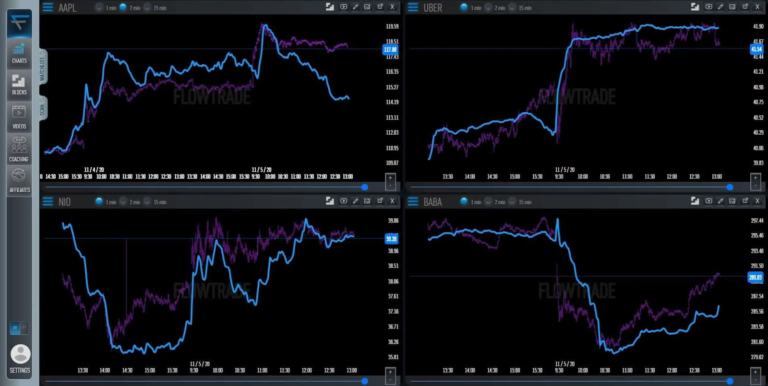
Dark pools allow institutions to buy or sell without revealing intentions.
Increases in dark-pool volume often signal:
- Institutional accumulation
- Pre-earnings positioning
- Sector rotation
- Hedge-fund strategy shifts
Real Example:
Before Nvidia’s massive earnings explosion, dark-pool data showed sustained institutional buying for weeks—even as retail investors remained uncertain.
3. Corporate Credit Markets
Stocks often follow bonds.
Institutions watch:
- High-yield spreads
- Investment-grade credit conditions
- Corporate refinancing activity
Real Example:
In 2007, credit markets deteriorated months before the stock market crashed. Institutional investors reduced risk; retail remained fully exposed.
4. Market Breadth and Participation
Institutions pay close attention to how many stocks are rising, not just index levels.
Weak breadth = market instability
Strong breadth = sustainable bull run
How Institutions Accumulate and Distribute Without You Knowing
Institutions rarely buy large positions in a single day.
Instead, they rely on:
Accumulation
Buying slowly during:
- Corrections
- Fear cycles
- Bad headlines
- Forced liquidations
Distribution
Selling quietly into:
- FOMO rallies
- Retail-driven hype
- High valuation cycles
Real Example:
During the meme-stock mania, institutions offloaded heavily into retail excitement—then rotated into undervalued sectors like energy and commodities, which later outperformed.
What Institutions Do During Market Stress
Understanding institutional behavior during chaos can save retail investors from catastrophic mistakes.
Institutions Do:
- Buy quality stocks at discounts
- Hedge portfolios with options
- Increase exposure to defensives
- Rebalance methodically
Retail Investors Often:
- Panic sell
- Chase safe-haven assets at the worst possible time
- React emotionally to headlines
- Exit at the bottom and buy at the top
Real Example:
In March 2020, retail panic selling hit record levels. Institutions accumulated blue-chip companies that later doubled or tripled.
How You Can Think Like an Institutional Investor (Even With Small Capital)
You don’t need millions to apply institutional logic.
1. Build a Rules-Based Framework
Predetermined rules eliminate emotional mistakes.
Examples:
- Buy 15–20% more during every market correction
- Reduce exposure when volatility is abnormally low
- Increase cash when valuations exceed historical norms
2. Watch Liquidity, Not Headlines
Headlines are late.
Liquidity is predictive.
3. Diversify Across Uncorrelated Assets
Institutions spread capital across:
- Equities
- Bonds
- Commodities
- REITs
- Cash equivalents
- Alternative investments
4. Think in Decades, Not Days
Institutions win by staying invested through:
- Recessions
- Rate cycles
- Geopolitical tension
Most wealth is built during the holding periods—not the timing.
5. Study Smart-Money Positioning
Monitor:
- 13F filings
- Insider buying/selling
- ETF flow trends
- Hedge-fund sentiment
If BlackRock, Vanguard, Fidelity, and State Street buy heavily—there’s a reason.
The Psychological Advantage of Institutions
Retail investors lose not because of a lack of intelligence, but because of predictable behaviors:
- Fear of missing out
- Fear of losing money
- Overconfidence during bull markets
- Panic during crashes
- Following social media trends
- Playing short-term games with long-term money
Institutions know these patterns well—and structure their trades to use retail emotions as liquidity.

10 Most Searched FAQs About Institutional Investors (With Answers)
1. What do institutional investors know that retail investors don’t?
They know liquidity cycles, credit signals, and accumulation strategies that predict market direction before headlines appear.
2. Do institutional investors manipulate the market?
Not illegally—markets simply move when large capital shifts. Their size naturally affects prices.
3. How do institutions buy stocks without raising the price?
Through systematic accumulation, algo trading, dark pools, and split orders over weeks or months.
4. Why do institutions buy when markets are crashing?
Because crashes offer the best long-term returns. They see fear as discounted inventory.
5. How do institutional investors manage risk?
With diversification, hedging, position sizing, and strict rules—they never rely on emotions.
6. What indicators do institutions use?
Liquidity data, credit spreads, volatility indexes, market breadth, dark-pool flows, and macroeconomic cycles.
7. How can a retail investor mimic institutional investing?
Follow rules, diversify, study liquidity trends, avoid hype stocks, and invest consistently.
8. Why do institutions care so much about credit markets?
Credit stress often signals future stock-market pain; companies fail in the bond market first.
9. Do institutional investors use technical analysis?
Some do, but only as one piece of a larger framework involving macro, fundamental, and quantitative analysis.
10. Why do retail investors often underperform the market?
Behavioral biases, emotional choices, over-trading, lack of diversification, and reacting to short-term noise.
Final Takeaways
If you want to invest like an institution instead of being exploited by one:
- Follow rules, not emotions.
- Study liquidity cycles.
- Buy during fear, trim during euphoria.
- Focus on quality, cash flow, and long-term durability.
- Diversify intelligently.
Institutional investors win because they build a system—and stick to it.
You can too.