
summary:
Mortgage rates are rising again because the 10-year Treasury yield has moved higher, inflation remains above the Federal Reserve’s target, and investors are demanding more compensation for long-term lending risk. Freddie Mac’s 30-year fixed average reached 6.71% on September 3, 2026. For buyers, the key question is not whether rates hit 7%, but whether the monthly payment still works.
Mortgage Rates Are Back Near 7%—But Why?
For much of 2026, prospective homebuyers have been watching mortgage rates closely, hoping that lower inflation and a less restrictive Federal Reserve would eventually translate into cheaper home loans. Instead, the market has moved in the opposite direction again.
Freddie Mac reported that the average 30-year fixed mortgage rate reached 6.71% on September 3, 2026, up from 6.66% the previous week and 6.50% one year earlier. The average 15-year fixed rate reached 6.04%.
That puts the market close enough to 7% that many Americans are asking a straightforward question: Why are mortgage rates rising again when the economy was supposed to be moving toward lower interest rates?
The answer is more complicated than simply saying “the Fed raised rates.”
Mortgage rates are influenced heavily by the bond market, particularly the yield on longer-term U.S. Treasury securities and the pricing of mortgage-backed securities. Those markets are responding to inflation expectations, economic growth, government borrowing, geopolitical risk and expectations for future monetary policy.
And in September 2026, several of those forces are pushing borrowing costs higher at the same time.
The First Big Reason: Treasury Yields Are Rising
One of the most important things for homebuyers to understand is that the mortgage rate you see advertised is not directly set by the Federal Reserve.
The Fed controls a short-term policy rate. Thirty-year mortgages, meanwhile, are long-term financial products. Lenders and investors price them based on expectations about inflation, economic growth, future interest rates and the return investors can get elsewhere.
The 10-year Treasury yield is therefore an important benchmark to watch.
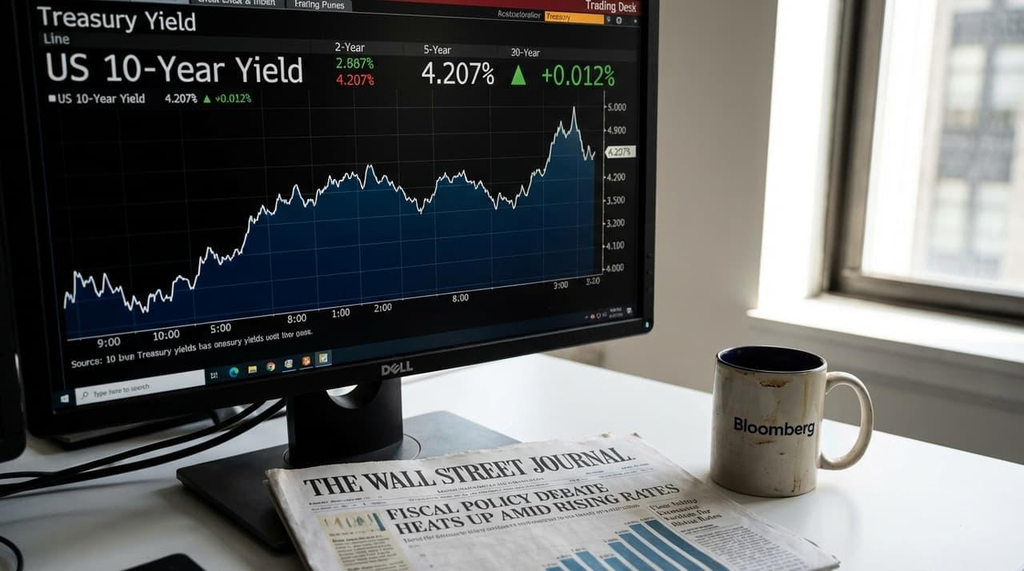
Recent market conditions illustrate the connection. The 10-year Treasury yield climbed toward 4.8% in early September, while the 30-year mortgage rate moved to its highest level since July 2025. Reuters reported that higher Treasury yields were being driven by concerns surrounding inflation, federal borrowing, debt sustainability and competition for capital.
This is why a Fed rate cut—or even the expectation of one—does not automatically produce a proportional decline in mortgage rates.
Imagine a buyer who was expecting mortgage rates to fall because the Fed might eventually ease monetary policy. If investors simultaneously become concerned about inflation or demand higher yields on long-term bonds, mortgage rates can remain elevated or even rise.
In other words, short-term Fed policy and long-term mortgage pricing can move differently.
Inflation Is Still Part of the Mortgage-Rate Problem
Inflation is another major piece of the puzzle.
The Federal Reserve has a long-run inflation target of 2%, but inflation pressures remain above that level. At the same time, energy prices have become an additional source of uncertainty amid geopolitical tensions.
The New York Fed reported in September that U.S. consumers expected inflation to run at 3.6% over the next year and 3% over five years. Consumer concerns about personal finances, employment and access to credit also increased.
For mortgage markets, inflation matters because investors care about the future purchasing power of the money they receive from long-term bonds and mortgage securities.
If investors believe inflation will remain elevated, they generally want higher yields.
Higher yields can then feed through into mortgage pricing.
That does not mean every increase in gasoline prices automatically causes mortgage rates to rise. Financial markets consider many factors simultaneously. But persistent inflation can make investors less confident that long-term interest rates will return quickly to the exceptionally low levels seen during the pandemic.
A Stronger Job Market Can Keep Rates Higher
The employment market is another reason mortgage rates have struggled to fall.
The August 2026 jobs report showed that U.S. employers added 162,000 jobs, substantially more than economists had expected. The unemployment rate remained at 4.1%. Average hourly earnings increased 3.1% from a year earlier.
A strong labor market can create a complicated situation for the Federal Reserve.
On one hand, stronger employment is positive for households because more people have jobs and income.
On the other hand, a resilient economy can make policymakers less comfortable with aggressively lowering interest rates if inflation remains above target.
Markets reacted accordingly. Following the stronger jobs report, Treasury yields moved higher and expectations for a September Fed rate increase increased.
For mortgage shoppers, this creates an important distinction:
A healthy economy does not necessarily mean cheaper mortgages.
If economic strength causes investors to expect higher-for-longer interest rates, mortgage rates can remain elevated.
Why a Fed Rate Cut Wouldn’t Automatically Bring Mortgage Rates Down
This is one of the most common misconceptions in the housing market.
A homeowner might reasonably think:
“If the Fed lowers rates, my mortgage rate should fall too.”
Not necessarily.
The Federal Reserve’s policy rate primarily influences short-term borrowing conditions. Mortgage rates are determined in a much larger market involving Treasury yields, mortgage-backed securities, lender funding costs, credit risk and investor demand.
Consider two hypothetical situations.
In the first, the Fed cuts rates because inflation is cooling rapidly and investors expect a prolonged period of lower interest rates. Treasury yields fall, and mortgage rates may decline as well.
In the second, the Fed cuts rates while investors remain worried about inflation, federal deficits and long-term borrowing needs. Long-term Treasury yields could remain elevated.
In that second scenario, mortgage rates may barely move.
That distinction is especially important in 2026 because long-term Treasury yields have remained elevated even as investors debate the future path of Fed policy. Reuters recently reported that the 10-year Treasury yield was nearing 5%, with investors demanding higher returns amid fiscal and inflation concerns.
Why Are Mortgage Rates Near 7% Again?
The simplest explanation is that several forces are reinforcing each other.
The current environment includes:
- Higher long-term Treasury yields
- Inflation still above the Fed’s 2% target
- A stronger-than-expected August jobs report
- Uncertainty about future Federal Reserve policy
- Higher energy prices and geopolitical risks
- Large U.S. government borrowing needs
- Investor concerns about long-term inflation and bond-market risk
Freddie Mac’s data shows how quickly the mortgage market has shifted. The 30-year fixed average moved from 6.43% on July 2 to 6.71% on September 3.
That is not a dramatic move by historical mortgage-market standards, but it is meaningful for a household borrowing several hundred thousand dollars.
What Does 6.7% vs. 7% Actually Mean for a Homebuyer?
The difference between 6.7% and 7% can sound small.
For a $400,000 mortgage, however, even a fraction of a percentage point affects the principal-and-interest payment.
Using a standard 30-year fixed loan:
- At 6.7%, the principal-and-interest payment is roughly $2,581 per month.
- At 7%, it is roughly $2,661 per month.
- The difference is about $80 per month.
Over 30 years, that seemingly modest monthly difference can add up to tens of thousands of dollars in additional interest if the loan is kept for its full term.
Of course, real mortgage costs also include property taxes, homeowners insurance, mortgage insurance when applicable, HOA fees, closing costs and potentially discount points.
That is why comparing only the advertised interest rate can be misleading.
A borrower offered 6.7% with significant points may not necessarily have a better deal than someone offered 6.9% with fewer upfront costs.
The better comparison is the total cost of the loan.
Should You Wait for Mortgage Rates to Fall?
There is no universal answer.
Waiting can make sense if buying today would stretch your budget to the point where you have little room for emergencies, repairs or changes in income.
But waiting solely because you expect a specific mortgage rate can also backfire.
Suppose a buyer delays purchasing a $450,000 home because they expect mortgage rates to fall from 6.7% to 6%. If rates eventually decline but the home appreciates substantially, some of the savings from the lower interest rate could be offset by a higher purchase price.
The reverse can also happen: rates could remain high while home prices soften or sellers become more negotiable.
That is why buyers should evaluate both the financing cost and the property price.
A useful way to think about the decision is:
Can I comfortably afford this home at today’s rate without assuming that refinancing will save me later?
If the answer is yes, a future refinance can be treated as a potential bonus rather than part of the original financial plan.
What Should Buyers Do While Rates Are Around 6.7%–7%?
The current market rewards careful preparation more than rate speculation.
First, determine the monthly payment you can actually afford rather than starting with the maximum loan amount a lender offers.
Second, get quotes from multiple lenders. Mortgage pricing can vary depending on credit score, down payment, loan type, property type, occupancy and other factors.
Third, compare the APR and total loan costs, not just the headline rate.
Fourth, ask lenders about rate-lock periods and the cost of extending a lock if closing is delayed.
Finally, consider whether buying points makes sense. Paying upfront to reduce the interest rate can be useful for some long-term homeowners, but it is not automatically worthwhile.
The right choice depends partly on how long you expect to keep the mortgage.
What About Existing Homeowners?
For homeowners who already have a mortgage with a much lower fixed rate, today’s environment is very different.
A borrower with a 3% or 4% mortgage may have little financial incentive to refinance into a new loan around 6.7%.
That creates a powerful “lock-in” effect.
Some homeowners who might otherwise sell are reluctant to give up their existing low-rate mortgages and take out a new mortgage at today’s rates. That can restrict the supply of existing homes and contribute to a housing market in which buyers face affordability problems even when demand is not exceptionally strong.
For homeowners considering refinancing, the calculation should include:
- Current mortgage rate
- New mortgage rate
- Remaining loan balance
- Closing costs
- Expected time in the home
- Break-even period
- Potential changes in taxes or insurance
A refinance generally needs a meaningful financial benefit to justify replacing an existing loan.
Could Mortgage Rates Reach 7% or Higher?
Yes. A 7% mortgage rate is entirely possible given the current market environment.
But that does not mean it is inevitable.
Mortgage rates can move quickly when Treasury yields, inflation expectations or financial-market sentiment change.
A cooler inflation report could push yields lower. A weaker labor market could change expectations for Federal Reserve policy. A reduction in geopolitical risk could also reduce some of the risk premium currently embedded in financial markets.
On the other hand, persistent inflation, higher energy prices, stronger economic growth or continued pressure in the Treasury market could keep rates elevated.
The key point is that 6.7% and 7% are not magic thresholds. The housing market does not suddenly become unaffordable at 7% or affordable at 6.9%.
Affordability depends on the entire financial picture.
Is There a Chance Mortgage Rates Fall Back Below 6%?
Eventually, yes—but timing is uncertain.
Forecasts are not guarantees, and the path of mortgage rates depends on variables that can change quickly.
Some earlier 2026 housing forecasts anticipated gradual improvement rather than a rapid return to ultra-low rates. Fannie Mae’s 2026 outlook, for example, projected mortgage rates remaining above 6% for much of the year rather than returning immediately to pandemic-era levels.
That is an important distinction for buyers who remember mortgage rates below 4%.
The financial conditions that produced those unusually cheap mortgages were extraordinary. Today’s borrowers should be cautious about treating 3% mortgage rates as the normal benchmark against which every future housing decision should be measured.
The Most Important Number May Not Be the Mortgage Rate
For an individual buyer, the most important question is not necessarily whether the national average is 6.71%, 6.5% or 7%.
It is whether your specific loan fits your financial situation.
Two households can receive the same mortgage rate and have completely different experiences.
A household with a large down payment, strong credit, stable income and manageable debt may comfortably handle a 6.7% mortgage.
Another household with high student-loan payments, credit-card balances and limited savings could be financially stretched even at a lower rate.
That is why national mortgage-rate averages are useful for understanding the market but cannot tell you whether you personally should buy a home.
Mortgage Rate FAQs for 2026
1. Why are mortgage rates rising again in 2026?
Mortgage rates are rising primarily because long-term Treasury yields have moved higher amid inflation concerns, strong economic data, government borrowing pressures and uncertainty about future Federal Reserve policy. Freddie Mac’s 30-year fixed average reached 6.71% on September 3, 2026.
2. Did the Federal Reserve directly raise mortgage rates?
Not directly. The Fed controls a short-term policy rate, while mortgage rates are primarily influenced by longer-term market rates, Treasury yields, mortgage-backed securities and lender pricing.
3. Will mortgage rates reach 7%?
They could. A 7% rate is within the range of possibilities if long-term Treasury yields and inflation expectations remain elevated. But mortgage rates can also move lower if inflation and bond yields decline.
4. Should I buy a house if mortgage rates are 7%?
It depends on your finances. Buying can make sense if the payment is comfortably affordable and you plan to stay long enough to justify transaction costs. Waiting may make more sense if the purchase would leave you financially stretched.
5. Should I wait for mortgage rates to fall below 6%?
There is no reliable date for when that might happen. Waiting for a particular rate can expose buyers to changes in home prices, inventory and competition.
6. Why don’t mortgage rates fall immediately when the Fed cuts rates?
Because mortgage rates are tied more closely to long-term bond-market conditions than to the Fed’s overnight policy rate. Treasury yields and mortgage-backed-security pricing can remain high even when the Fed begins easing.
7. Is 6.7% a high mortgage rate?
It is considerably higher than the exceptionally low rates available during the pandemic, but it is not unprecedented historically. The more useful question is whether the rate works with the home’s price and your household budget.
8. Should I refinance if my current mortgage is above 6%?
Not automatically. Compare the new rate with your existing rate, closing costs, remaining balance and expected time in the home. Calculate the break-even period before refinancing.
9. Will mortgage rates fall if inflation cools?
They could, particularly if lower inflation causes Treasury yields and expectations for future rates to decline. But other forces can offset that effect.
10. What mortgage rate should I wait for?
Instead of choosing an arbitrary target, determine the maximum monthly payment you can comfortably afford. That gives you a more useful personal threshold than trying to predict the national mortgage rate.
When the Rate Changes, the Math Changes
Mortgage rates around 6.7%–7% are uncomfortable for many U.S. buyers, but they are not a reason to make a housing decision based on headlines alone.
The bigger story is that today’s mortgage market is being shaped by long-term bond yields, inflation expectations, economic strength and investor risk perception—not simply by the next Federal Reserve announcement.
For buyers, that means focusing on the parts of the equation they can control.
Get your credit in good shape. Build an appropriate cash reserve. Compare lenders. Understand the difference between rate and APR. Consider the complete monthly housing cost. And, most importantly, make sure the purchase works financially without requiring a future rate decline to rescue the budget.
If rates eventually fall, refinancing may become an option. If they remain near 7%, a financially sound purchase should still be manageable.
That is a much stronger strategy than trying to predict the exact week mortgage rates will finally fall.
The 2026 Mortgage-Market Numbers Worth Remembering
- 6.71%: Freddie Mac’s average 30-year fixed mortgage rate on September 3, 2026.
- 6.04%: Freddie Mac’s average 15-year fixed mortgage rate on the same date.
- 4.8% range: Recent 10-year Treasury yields, an important indicator for long-term borrowing costs.
- 4.1%: U.S. unemployment rate in August 2026.
- 162,000: August U.S. payroll increase reported in September.
- 3.6%: New York Fed survey respondents’ median one-year inflation expectation in August.