
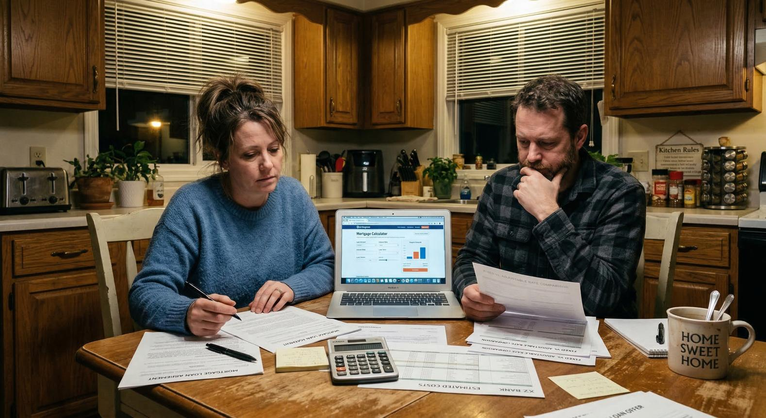
Summary:
The Federal Reserve enters its September 15–16, 2026 meeting facing a difficult choice: inflation remains above its 2% target, while recent employment data show renewed strength. Markets have moved toward pricing in a possible quarter-point increase, but Fed officials remain divided. For Americans, the decision could affect borrowing costs, savings yields, housing, stocks, bonds, and the dollar.
The September Fed Decision Is Suddenly Much Less Certain
The Federal Reserve’s September meeting is shaping up to be one of the most closely watched U.S. economic events of the fall. The Federal Open Market Committee is scheduled to meet September 15–16, with its decision and press conference on September 16.
The central question is straightforward: Will the Fed raise interest rates in September 2026?
The answer, as of September 9, is that a hike is a meaningful possibility—but it is not a certainty.
The Fed has held its target federal funds rate at 3.50% to 3.75% since the beginning of 2026. At its July meeting, the committee voted 9–3 to leave rates unchanged, while three members preferred a quarter-point increase. The official statement said economic activity was expanding at a solid pace, but inflation remained elevated relative to the Fed’s 2% objective.
Since then, the economic picture has become more complicated.
The August jobs report showed U.S. employers adding 162,000 jobs, substantially stronger than expected, while the unemployment rate remained at 4.1%. Average hourly earnings increased 3.1% from a year earlier.
That report changed the interest-rate conversation. Reuters reported that markets were pricing roughly a 58%–62% probability of a September hike in the days following the jobs data, while UBS shifted its forecast to two 2026 increases, including one in September.
But there is another side to the story.
Fed Governor Christopher Waller said September 3 that he would be inclined to support holding rates if incoming inflation data continued to show disinflation. He also said a rate increase could become appropriate if the August data suggested that improvement had been temporary.
In other words, the Fed is watching the data—not simply following a predetermined schedule.
Why Is the Fed Considering a Rate Hike?
The Fed’s basic job is to pursue maximum employment and stable prices. When inflation remains too high, higher interest rates can slow demand by making borrowing more expensive.
That can affect everything from business investment and home purchases to credit-card spending and auto financing.
The complication in September 2026 is that the economy is sending mixed signals.
On one hand, employment has recently strengthened. On the other, some measures of household financial confidence and labor-market security have deteriorated. A recent New York Fed survey found that consumers’ expectations for inflation remained elevated while concerns about unemployment and household finances increased.
The Fed therefore has to weigh two competing risks.
If it keeps rates too low while inflation remains persistent, price pressures could become harder to control. If it raises rates too aggressively while the economy is losing momentum underneath the surface, it could unnecessarily weaken employment and economic activity.
That is why a single jobs number cannot determine the September decision.
The key questions Fed officials are likely asking include:
- Is inflation continuing to move toward 2%?
- Are recent price increases temporary or becoming persistent?
- Is the labor market genuinely strengthening?
- Are wage gains creating additional inflation pressure?
- Are households and businesses still spending comfortably?
- How much are energy prices affecting inflation expectations?
- Is monetary policy already restrictive enough?
Those questions matter more than simply asking whether the latest economic report was “good” or “bad.”
What the August Jobs Report Changed
The August employment report was particularly important because the labor market is one half of the Fed’s dual mandate.
Employers added 162,000 jobs in August, the strongest monthly gain in five months, while unemployment held at 4.1%. The labor-force participation rate increased to 61.6%.
At first glance, those figures suggest an economy that can tolerate tighter monetary policy.
But the details matter.
Long-term unemployment increased, and the median duration of unemployment rose to 11.4 weeks, according to Reuters’ reporting on the data. Wage growth also slowed slightly from July’s pace.
That creates a more nuanced picture than the headline job-growth figure suggests.
Imagine a household where one spouse has just received a promotion while another family member has been looking for work for several months. Saying “the household is doing well because income increased” would miss important information.
The same principle applies to the national labor market.
The Fed needs to understand not only how many jobs are being created but what kind of jobs, how broadly employment is growing, how long people remain unemployed, and whether wages are creating additional price pressure.
Inflation May Ultimately Decide the September Meeting
The Fed’s 2% inflation target remains the central reference point.
In July, the Fed explicitly said inflation remained elevated relative to its 2% goal and pointed to supply shocks, including energy-related price increases.
That is important because policymakers cannot simply assume that a strong economy means inflation will automatically disappear.
Recent geopolitical developments have also complicated the outlook. Energy prices have been volatile, creating the possibility that higher fuel and transportation costs could feed into broader consumer prices.
The Fed faces a difficult distinction here.
A temporary increase in gasoline prices does not necessarily require a large monetary-policy response. But if higher energy and other input costs begin influencing wages, consumer expectations and business pricing decisions, policymakers may become more concerned about persistent inflation.
That is one reason the upcoming inflation data could have an outsized influence on the September decision.
What consumers should watch
If you’re trying to anticipate the Fed’s decision, focus less on headlines saying “inflation rose” or “inflation fell” and more on:
- The overall CPI trend
- Core inflation excluding food and energy
- Housing-related inflation
- Service prices
- Wage growth
- Consumer inflation expectations
- Energy-price developments
The important question is whether inflation is moving sustainably toward the Fed’s target—not whether one monthly number happens to be higher or lower.
What Would a Quarter-Point Rate Hike Actually Mean for Americans?
A 0.25-percentage-point increase sounds small.
For some households, it may barely be noticeable. For others, particularly people carrying substantial variable-rate debt, it can matter.
Suppose you have a variable-rate balance that eventually reprices by roughly 0.25 percentage point. A $20,000 balance would theoretically generate about $50 more annual interest if the entire increase were passed directly through and the balance remained unchanged.
That’s not a reason to panic. But the effect becomes more meaningful when the balance is $50,000, $100,000 or more.
And not every financial product responds identically.
Credit cards
Credit-card rates are generally variable, so changes in short-term interest rates can eventually influence what borrowers pay.
Someone carrying a balance of $10,000 could therefore feel a rate increase more directly than someone who pays the card in full every month.
This is one reason the most financially useful response to a Fed hike is often not trying to predict the stock market. It may simply be reducing expensive variable-rate debt.
Mortgages
The relationship between the Fed and mortgage rates is frequently misunderstood.
The Fed does not directly set 30-year mortgage rates.
Mortgage rates are heavily influenced by longer-term Treasury yields, mortgage-backed securities and expectations about future economic conditions and monetary policy.
As a result, a Fed hike does not automatically mean mortgage rates rise by exactly 0.25 percentage point.
A prospective homebuyer should therefore watch mortgage-rate quotes rather than assuming the Fed’s decision tells them exactly what their lender will charge.
Auto loans
Auto financing can also become more expensive in a higher-rate environment, particularly for borrowers with weaker credit.
Consider someone financing a $40,000 vehicle. Even a modest change in the interest rate can add hundreds of dollars to the total financing cost over several years.
That makes the borrower’s credit score, down payment and loan term just as important as the Fed decision itself.
Savings accounts and CDs
Higher rates can be good news for savers.
Banks do not always pass rate changes through equally or immediately, but a higher-rate environment can support attractive yields on savings accounts, money-market products and CDs.
This creates an important distinction:
A Fed hike is not automatically bad for everyone.
Borrowers generally dislike higher rates. Savers with cash can benefit.
What Does a September Rate Hike Mean for Stock Investors?
Stocks can react quickly to Fed decisions because interest rates influence both corporate financing costs and the valuation investors assign to future earnings.
Higher rates can make bonds and other fixed-income investments relatively more attractive. They can also increase the discount rate applied to future corporate cash flows.
That is particularly relevant for growth stocks, including many technology and AI companies.
Yet investors should avoid assuming that “Fed hike = stocks fall.”
Markets are more complicated than that.
If investors already expect a quarter-point increase, the actual decision may produce a relatively muted reaction. What can move markets more dramatically is an unexpected change in the Fed’s outlook.
For example, imagine investors expect one hike followed by several months of stability. If the Fed instead signals that additional increases are possible, Treasury yields could rise and stocks could reprice.
Conversely, if the Fed raises rates but signals that it believes inflation is cooling sufficiently to stop tightening, stocks could respond positively.
The message surrounding the rate decision can therefore matter as much as the decision itself.
What Investors Should Watch on September 16
The headline rate decision will probably dominate financial coverage, but experienced investors should look beyond it.
Pay particular attention to:
- The FOMC statement
- The Fed’s updated economic projections
- The press conference
- Officials’ inflation assessment
- Their assessment of employment
- The expected path for future rates
- Treasury-yield movements
- The dollar
- Equity-market reaction
The September meeting is also associated with a new Summary of Economic Projections, according to the Fed’s meeting calendar.
That makes the meeting particularly useful for understanding policymakers’ updated expectations for growth, unemployment, inflation and interest rates.
Should You Change Your Financial Plan Before the Fed Meeting?
For most Americans, making a major financial decision solely because of one Fed meeting is usually unnecessary.
Instead, use the uncertainty as an opportunity to review decisions that already matter.
If you’re carrying high-interest debt, prioritize the interest rate you’re actually paying rather than trying to forecast the Fed.
If you’re holding emergency savings, compare your current savings yield with competitive alternatives.
If you’re buying a home, calculate what payment remains comfortable at today’s mortgage rate rather than assuming rates will fall soon.
If you’re investing for retirement, focus on your time horizon and asset allocation rather than attempting to trade around a single policy announcement.
A practical example illustrates the difference.
Suppose a couple has $30,000 in cash, $15,000 in credit-card debt and a long-term retirement portfolio. They might be tempted to leave everything unchanged while waiting to see what the Fed does.
But their credit-card interest rate may already be far more consequential to their finances than a quarter-point Fed move.
In that situation, paying down expensive debt could provide a more predictable financial benefit than trying to guess whether stocks will rise or fall after the September meeting.
What If the Fed Doesn’t Raise Rates?
A decision to hold rates would not necessarily mean the Fed has abandoned concerns about inflation.
It could mean policymakers want more evidence.
This distinction is important.
Fed Governor Waller has explicitly indicated that continued evidence of disinflation could support holding rates, while also leaving open the possibility of a September increase if incoming data disappoint.
A hold could therefore be interpreted as a cautious, data-dependent decision rather than a signal that rate increases are permanently off the table.
Markets would then turn their attention toward October and December.
The Fed’s next scheduled meetings after September are October 27–28 and December 8–9.
What If the Fed Raises Rates?
A quarter-point hike would take the federal funds target range to 3.75%–4.00%, assuming the increase is the standard 25 basis points.
The immediate effects would vary across financial products.
Borrowers with variable-rate debt could eventually face higher costs. Savers could potentially benefit from better yields. Bond markets would react to the expected future path of rates, while stocks could respond to changes in valuation assumptions.
But the most important question would probably be:
Does the Fed expect another hike after September?
If policymakers characterize September as a one-time adjustment, markets could respond differently than if the Fed signals a longer tightening campaign.
The Bigger Question: Is Inflation Falling Fast Enough?
The September meeting is ultimately about more than one rate decision.
The Fed has to determine whether inflation is moving sustainably toward its 2% goal while employment remains reasonably healthy.
That is why the current environment is difficult.
The latest Beige Book described economic activity as increasing modestly, with slight employment gains and moderate price increases, while businesses remained sensitive to elevated costs.
Meanwhile, consumer expectations for one-year inflation were 3.6% in August, according to the New York Fed’s latest survey.
Those numbers are not necessarily evidence that inflation is spiraling. But they demonstrate why policymakers remain cautious.
The Fed does not want inflation expectations to become permanently disconnected from its 2% objective.
Frequently Asked Questions
1. Will the Fed raise interest rates in September 2026?
A rate increase is a significant possibility, but the outcome remains uncertain. Markets have recently assigned roughly a 60% probability to a September hike, while Fed officials remain divided.
2. When is the Fed’s September 2026 meeting?
The Federal Open Market Committee is scheduled to meet September 15–16, 2026. The policy decision and press conference are scheduled for September 16.
3. What is the Fed’s current interest rate?
As of the July 29, 2026 meeting, the federal funds target range was 3.50% to 3.75%.
4. How much would a Fed rate hike increase mortgage rates?
There is no automatic one-for-one relationship. Mortgage rates are influenced heavily by longer-term Treasury yields, mortgage-backed securities and expectations for future monetary policy.
5. Will credit-card rates rise if the Fed raises rates?
They can. Many credit cards have variable rates tied to benchmark rates, so borrowers can eventually see higher interest costs when monetary policy tightens.
6. Are higher Fed rates good for savings accounts?
They can be. Banks and financial institutions may offer higher yields when short-term rates are elevated, although individual institutions do not necessarily adjust rates equally or immediately.
7. Could a Fed hike cause stocks to fall?
It could, particularly if the increase is unexpected or accompanied by a more hawkish outlook. But markets often react more to the Fed’s future guidance than to the rate change itself.
8. Should I wait to buy a house until after the Fed meeting?
Not necessarily. A single Fed meeting cannot reliably predict mortgage rates. Buyers should evaluate affordability using the rates and home prices they can actually obtain today.
9. What happens if the Fed holds rates in September?
A hold would leave the federal funds target range unchanged and shift investor attention toward future inflation, employment and subsequent Fed meetings.
10. Where can I follow the Fed’s decision?
The Federal Reserve publishes FOMC statements, meeting calendars, projections and press conferences through its official website.
When the September Decision Becomes Real Money
The most useful way to think about the September Fed meeting is not as a prediction game.
For households, the decision is a reminder to understand how interest rates interact with the financial products you already use. A homeowner, credit-card borrower, saver and stock investor can experience the same Fed decision in completely different ways.
For investors, the bigger issue is the path of monetary policy. A single quarter-point move matters, but expectations about where rates go next can influence Treasury yields, valuations, corporate financing and the dollar for months.
For consumers, the best response is usually more practical: know your debt rates, maintain an appropriate cash reserve, compare savings yields, and avoid taking on a payment that only works if rates fall.
The Fed will make its decision based on economic data. Individuals do not have that luxury when managing their own finances. The better strategy is to build a financial plan that remains workable whether the September decision is a hike or a hold.
The September Rate-Decision Checklist
- Consumers with debt: Check variable-rate balances and prioritize expensive debt.
- Homebuyers: Focus on the mortgage payment you can comfortably afford today.
- Savers: Compare your savings or money-market yield with competitive alternatives.
- Investors: Watch the Fed’s forward guidance, not just the headline rate.
- Stock investors: Pay attention to Treasury yields and valuation-sensitive sectors.
- Everyone: Avoid making major financial decisions based solely on one Fed announcement.
- After September: Continue watching inflation, employment and the October and December Fed meetings.